Navigating Cost Volatility
This blog post is a follow-up to our February update addressing tariff risk and related market pressures. We continue to actively monitor both overall market conditions and feedback from our subcontractor and vendor partners to better understand current cost trends.
The graphs below show the Producer Price Index (PPI) data over the last 15 months for several key materials used in our projects. We have also added, as of this edition of our update, the PPI data titled Inputs to Multi Family Construction. “Inputs” track how the prices of materials and components used to build Multi Family projects change over time, reflecting what contractors pay before labor, overhead, and markup.
It’s important to note that the PPI is a relative index, not a direct price. It measures changes in the selling prices received by domestic producers over time. As such, these figures do not translate directly into costs per ton, board foot, or other unit measures.
A recent Wall Street Journal article, “The Housing Market’s Latest Hurdles: Copper, Lumber, Diesel and Aluminum,” highlights how escalating material and transportation costs are creating additional challenges for homebuilders and developers already navigating high interest rates and affordability concerns.
According to the report, prices for key construction inputs, including copper, lumber, diesel fuel, aluminum, resins, and plastics have surged due to a combination of global supply disruptions, tariffs, geopolitical conflict, and strong demand tied to infrastructure and data-center expansion. Copper prices have reached record highs amid production issues at major mines and growing electrical demand, while lumber prices continue to climb due to Canadian import duties and reduced sawmill capacity (sawmills closed when lumber was at its recent low (December of 2025) due to infeasibility to keep them open. Diesel and fuel-related increases are also driving up freight and delivery expenses across the construction supply chain.
For the construction and development sector, the takeaway is clear: material volatility remains a significant risk factor in both residential construction and renovation activity. Procurement planning, long-term supplier relationships, and cost forecasting will continue to play a critical role as the industry adapts to ongoing market uncertainty.
Source: The Wall Street Journal, “The Housing Market’s Latest Hurdles: Copper, Lumber, Diesel and Aluminum,” May 2026.
We will continue to closely monitor market conditions and provide updates as new information becomes available.
Lumber
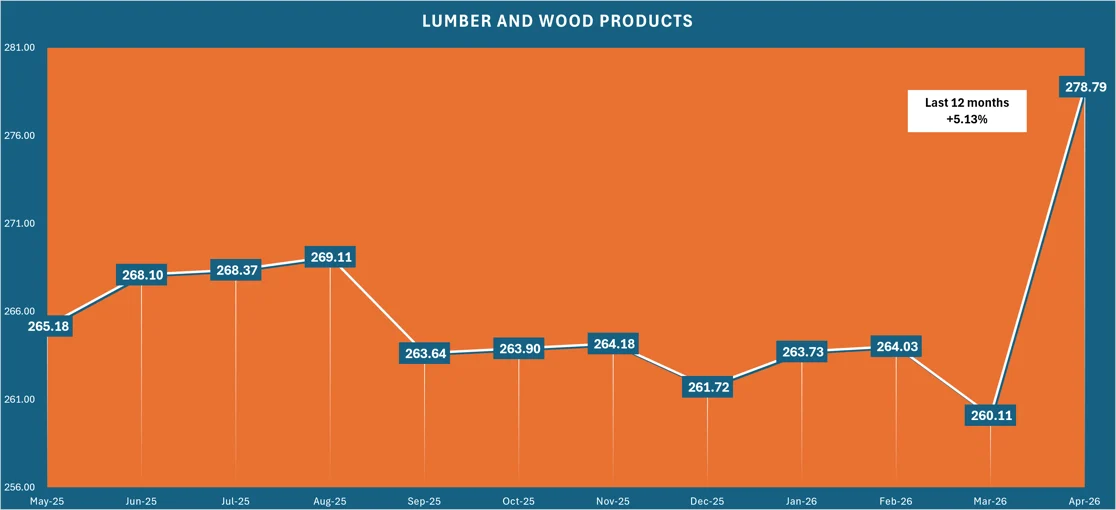
Lumber’s Producer Price Index (PPI) has spiked in recent months due to a combination of supply constraints, tariffs, mill shutdowns, and rising transportation costs hitting the market at the same time.
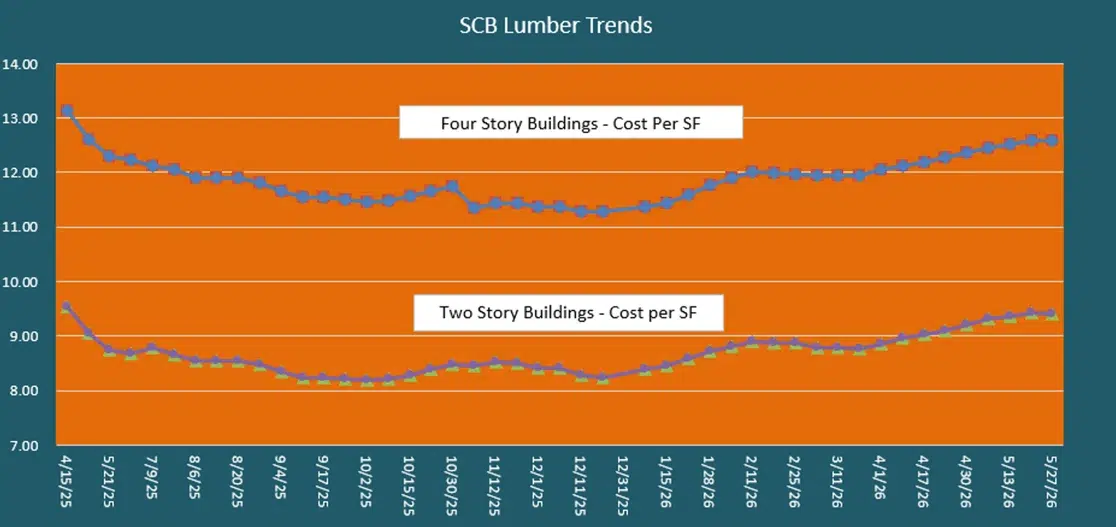
The graph above reflects actual retail-level lumber pricing based on two prototype buildings. Pricing is collected regularly from our suppliers to provide a more tangible, real-world view of lumber cost trends.
Steel
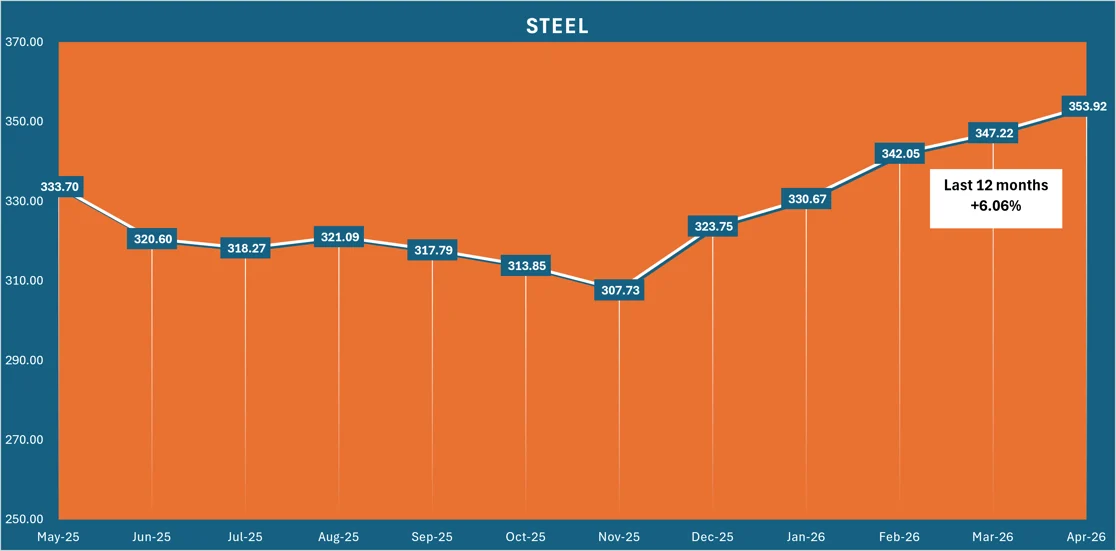
Steel’s prices have risen sharply in recent months because of a mix of higher energy costs, supply-chain pressures, and stronger demand from infrastructure and industrial construction.
Gypsum
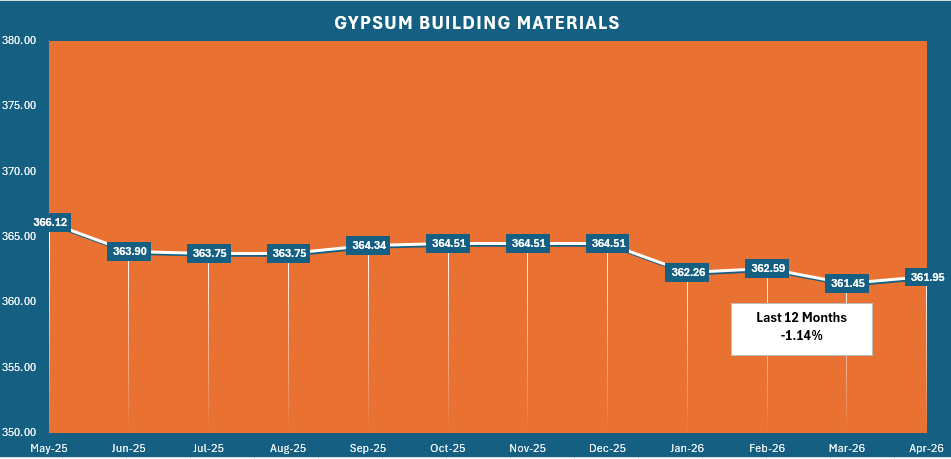
No major headlines for U.S. gypsum-specific tariffs, etc. Overall, prices for Gypsum Building Materials were relatively flat for the last 12 months. Fuel costs, transportation inflation could have impacts in the near future.
Redi Mix Concrete
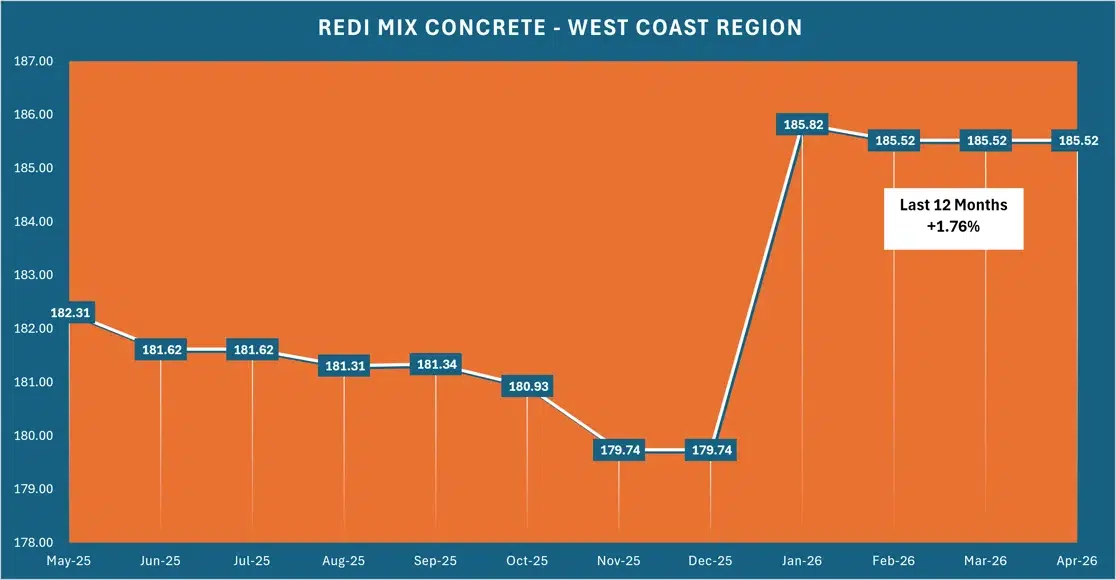
Cement production is extremely energy-intensive. Rising natural gas, electricity, and diesel prices have increased both manufacturing and delivery costs. Ready-mix concrete is highly sensitive to fuel costs because trucks operate continuously and concrete must be delivered within tight time windows.
Diesel inflation has therefore had an outsized impact on West Coast concrete pricing via surcharges that are imposed as fuel prices increase (these surcharges are probably not reflected in the above graph).
Sand, gravel, and crushed stone prices have also increased due to quarry permitting challenges, land-use restrictions, and higher operating costs. At the same time, union wage increases and shortages of skilled labor have added additional pressure to batch plant operating costs.
Copper and Switch Gear
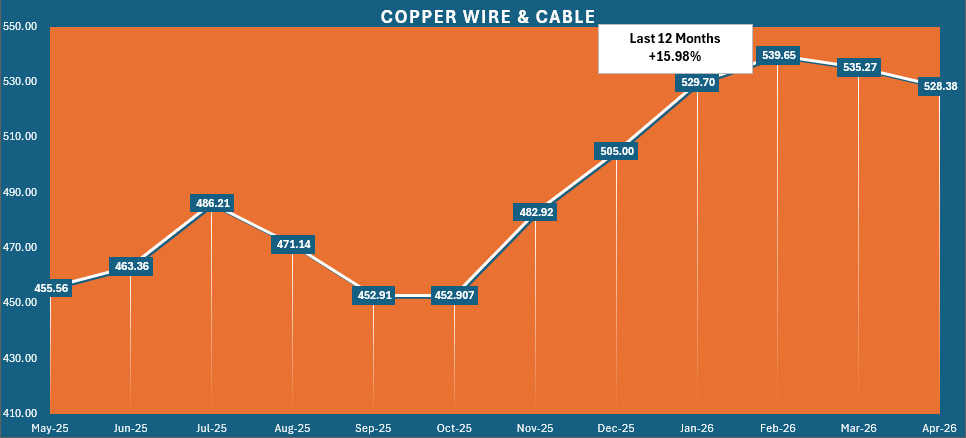
There are several major forces that are driving increases:
- Explosive demand from data centers and AI infrastructure
- Grid modernization and electrification projects
- Global copper supply shortages and mine disruptions
- Tariffs and trade uncertainty
- Strong construction and infrastructure demand
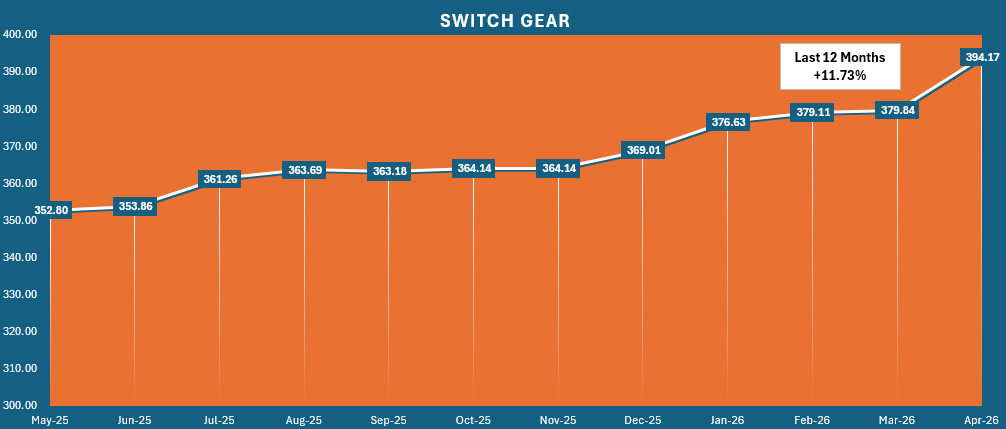
Switchgear is considered a “bundle” commodity, incorporating steel, aluminum, copper, and other materials. As such, it is exposed to multiple mechanisms within its manufacturing process that expose it to cost increases. Combined with long production lead times, this makes switchgear pricing a particularly sensitive uncertainty. Just the concept of a potential price increase can place upward pressure on pricing as manufacturers factor potential future exposure into their forecasts.
Inputs to Multifamily Construction
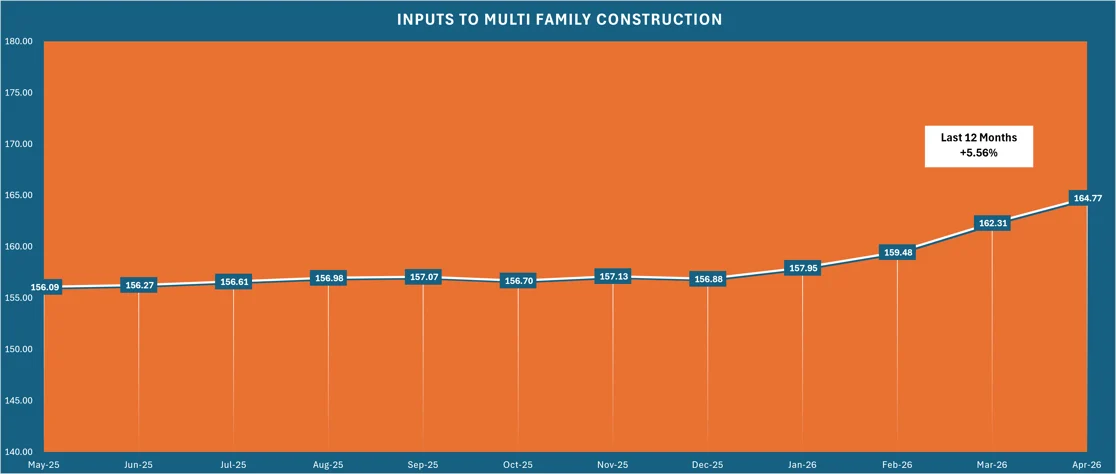
Multi Family Construction costs over the last year have been driven by a broad rise in the cost of nearly every major construction input category especially:
- Concrete and cement escalation
- Steel and metal product inflation
- Electrical system cost surges (copper wire & equipment)
- Mechanical, plumbing, and HVAC inflation
- Gypsum wallboard and interior finish increases
- Higher transportation (fuel) costs
- Building code and regulatory requirements
Labor
Sun Country Builders is still not experiencing a shortage of manpower amongst our skilled field trades (which currently number between 80-100 persons), and we continue to be able to add qualified workers as needed. State prevailing wage labor rates have increased between 5% and 6% depending on the trade. Federal prevailing wage rates have remained flat.
In Summary
Overall, lumber pricing, per the PPI index, has increased by 6.5% since the end of last year. As stated in our last update, lumber was on the move upward in December of 2025 and has continued to some degree since.Our in-house tracking suggests that lumber has increased more like 11% since December of 2025 for the lumber we buy to build your buildings.Since January of 2025, lumber has increased by 6% on the PPI but has increased by 10.5% on our in-house tracking data.
Steel prices increased approximately 6% over the last 12 months and has increased by 24% since January of 2025. Gypsum products have remained stable, dropping a little more than 1% over the last 12 months and have dropped .25% since January of 2025. Concrete pricing had an increase at the beginning of 2026 of about 3.5% but has remained stable since. Since January of 2025, concrete has increased by 2.57%.
Once again, copper wire and switchgear have had notable cost increases.Since the end of 2025 there have been increases of 4.6% and 6.8% respectively, and since January of 2025, there have been increases of 26.6% and 19.6% respectively.
California diesel prices rose from roughly from $5.10 per gallon a year ago to approximately $7.20–$7.40 per gallon in spring 2026, or 43%. Diesel fuel impacts numerous components of our buildings whether it is transportation/equipment costs or manufacturing costs.
A collaborative approach for preconstruction is more important than ever.
In today’s construction environment, where material pricing continues to fluctuate, a collaborative approach to building design is more important than ever. Bringing a contractor on board during the preconstruction phase allows the project team to proactively evaluate costs, identify procurement risks, and implement value engineering strategies before construction begins.
Early contractor involvement helps align design decisions with real-world market conditions, improves constructability, reduces costly redesigns, and ultimately creates more predictable budgets and schedules over the life of the project.